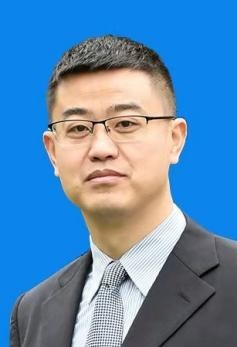
Yang Xiao
The University of Alabama, USA, IEEE Fellow, IET
Fellow, AAIA Fellow
Prof. Xiao is a Professor at the Dept. of Computer Science at the
University of Alabama. He directed 20+ doctoral dissertations; supervised 20+ M.S. theses/projects;
published 300+ SCI-indexed journal papers and over 300+ conference papers with 30K+ citations and
h-index=87 by Google Scholar; is ranked #188 and #481 in the USA (#362 and #808 in the world) by
Research.com among Best Scientists for 2024 in EEE and CS, respectively; named a 2024 Highly Ranked
Scholar in Lifetime by ScholarGPS; and identified as one of Top 2% Scientists in the world by the
scientists of Stanford University.
He was a Voting Member of the IEEE 802.11 Working Group from 2001 to 2004,
involving the IEEE 802.11 (Wi-Fi) standardization work. He is a Fellow of IEEE, IET, AAIA, AIIA, and
ACIS. He served as a Guest Editor over 40 times for journals, including the IEEE JSAC in 2022-2023, IEEE
TNSE in 2021, IEEE TGCN in 2021, IEEE Network in 2007, IEEE Wireless Communications in 2006 and 2021,
IEEE Communications Standards Magazine in 2021, and MONET in 2008. He has been serving as an Editorial
Board Member / Associate Editor for 20+ journals, including IEEE TNSE since 2022, IEEE TYB since 2020,
IEEE TMSC: SYSTEMS from 2014 to 2015, IEEE TVT from 2007 to 2009, and IEEE COMST from 2007 to 2014. He
serves/served as a TPC for 300+ conferences. He received the IEEE TNSE Excellent Editor Award in 2022
and 2023.
Speech Title: Theory Studies of Deployment of Sensor Arrays
Abstract: Due to the low cost and good privacy protection of binary sensors, there are many
applications of binary sensors. To enhance the spatial awareness of binary sensors, researchers utilize
modulators to modulate the views of sensors into visible and invisible regions so that the monitoring
space is segmented into small cells identified by signatures. When a warm object moves in these cells,
its location or moving trajectory can be acquired more accurately with modulators than without
modulators. Accordingly, the maximum number of cells (MNC) in a deployment partially determines the
maximal spatial awareness of the binary sensor system. In this talk, we provide a theoretical study of
the MNC, given the number of sensors and modulators. We also find the sufficient and necessary
conditions to achieve the MNC so that we provide the reasons why deployment cannot obtain the MNC. These
conditions can guide researchers in designing MNC deployments. Furthermore, we provide a method to
calculate the number of cells when a deployment sometimes cannot obtain the MNC. Our experiments provide
deep insights into the influences of those conditions on the MNC and the MNC on the spatial awareness of
binary sensor systems.

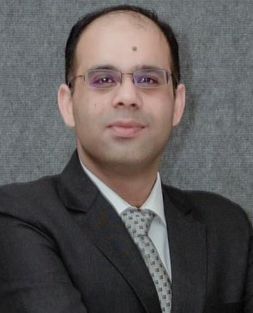
Maode Ma
Qatar University, Qatar, ACM Member, IEEE Senior
Member, IET Fellow
Prof. Maode Ma, a Fellow of IET, received his Ph.D. degree from the
Department of Computer Science at the Hong Kong University of Science and Technology in 1999. Now,
Prof. Ma is a Research Professor in the College of Engineering at Qatar University in Qatar. Before
joining Qatar University, he has been a faculty member at Nanyang Technological University in
Singapore for over 20 years. He has extensive research interests including network security and
wireless networking. He has led 26 research projects funded by government, industry, military, and
universities in various countries. He has supervised 25 research students to get their Ph. D degrees.
He has been a conference chair, technical symposium chair, tutorial chair, publication chair,
publicity chair, and session chair for over 100 international conferences. He has been a member of the
technical program committees for more than 200 international conferences. Prof. Ma has more than 500
international academic publications including over 250 journal papers and about 250 conference papers.
He has edited a few technical books and produced over 28 book chapters. His publication has received
over 10,000 citations in Google Scholar. He has delivered over 90 keynote speeches and 10 tutorials at
various international conferences. Prof. Ma currently serves as the Editor-in-Chief of the
International Journal of Computer and Communication Engineering and the Journal of Communications. He
also serves as a Senior Editor for IEEE Communications Surveys and Tutorials, and an Associate Editor
for the International Journal of Wireless Communications and Mobile Computing and International
Journal of Communication Systems. Prof. Ma is a senior member of the IEEE Communication Society and a
member of ACM. He is now the Chair of the ACM, Singapore Chapter. He has been serving as an IEEE
Communication Society Distinguished Lecturer from 2013 to 2016 and from 2023 to 2024.
Speech Title: Security Enhancements for Relay Communications of Drones
Abstract: The advancements in Unmanned Aerial Vehicle (UAV) technology have led to the
emergence of the Internet of Drones (IoDs), which have been widely used in various applications, such
as disaster assessment, material delivery, and environmental monitoring, due to their flexibility.
However, operating in insecure open environments presents significant risks, making them crucial to
complete tasks without exposing sensitive information to attackers or unauthorized users.
Additionally, the communication range between drones and ground station (GS) is often limited, and if
a drone flies beyond the range, the likelihood of mission failure increases substantially. To address
these challenges, a UAV-assisted Authentication Protocol (UAP) based on Physical Unclonable Functions
(PUFs) is designed, leveraging 5G wireless communication technique to enable secure relay
communication between drones and GSs. The proposed protocol is verified to effectively resist various
security threats including masquerade and replay attacks. The performance of the solution has been
evaluated and compared with other existing solutions on both computational and communication
overheads. It shows that UAP is an efficient secure solution for various applications which need relay
communication supports and it is feasible to be deployed.

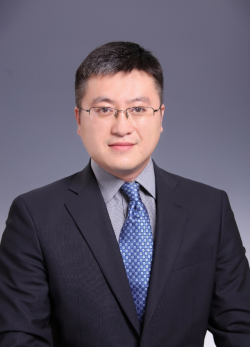
Pavel Loskot
Zhejiang University, China, IEEE Senior
Member
Pavel Loskot (Senior Member, IEEE) received the B.Sc. and M.Sc. degrees
in biomedical electronics and radioelectronics from the Czech Technical Universiyt of Prague, Czech
Republic, and the Ph.D. degree in wireless communications from the University of Alberta,
Canada.,Before joining ZJU-UIUC Institute as an Associate Professor in 2021. He was a Senior
Lecturer with Swansea University, U.K. From 2014 to 2015, he was a Visiting Researcher with
Computational Science Research Center, Beijing, China. From 1999 to 2001, he was a Research
Scientist with the Centre for Wireless Communications, Oulu, Finland. His research interests focuse
on mathematical modeling, statistical signal processing and machine learning for multi-sensor, and
time-series data. He is an Elected IARIA Fellow 2025, a Fellow of the Higher Education Academy,
U.K., and holds a Recognized Research Supervisor distinction by the U.K. Council for Graduate
Education. He is a Technical Committee Member of many IEEE conferences annually. From 2014 to 2020,
he served on the IEEE Membership Development Team and Selection Committee, the U.K., and Ireland
Section.
Speech Title: Space-Time Inverse Problems
Abstract:The spatial signals are generated by spatially distributed sources, which can be
observed at different spatial locations. The resulting 2D random processes can be projected by an
array of co-located omni-directional sensors to create a vector Gaussian process. It is often of
interest to resolve the location of the dominant radiation sources by formulating the corresponding
inverse problem of direction-of-arrival (DoA) estimation. Other such problems can assume source
separation and extraction, source detection and tracking, and space-time interpolations. In this
talk, we will focus on reviewing the key ideas and methods for estimating DoA and other parameters
of interest at multi-antenna receivers in wireless communication scenarios. I will show that the
problem formulation and the achievable resolution are dependent on whether the signals are
narrowband, or when they must be considered to be wideband.
TBA......